PAGE CONTENTS:
Noise Control Suggestions for
SPORTFISHERMAN
Noise Control Suggestions for
TRAWLER YACHTS
and other AFT CABIN BOATS
Noise Control Suggestions for SAILING VESSEL |
Noise Control Suggestions for
SPORTFISHERMAN
1) Insulation of the overhead and forward bulkhead:
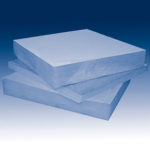
2" of Soundown Lead Foam or Quilted Lead/Fiberglass
2) Insulation of the aft bulkhead, below the portion exposed to the cockpit (optional).
If insulated, use only 1" No Lead Soundown sound absorption
3) Insulation of the aft bulkhead portion exposed to the cockpit: -Insulate similar to
1.
4) Overhead of space above engines install ¾" Soundown Acoustic headliner
5) Beneath carpets in salon (for enclosed salon with carpeted floor):
-install ¼" x 1 lb/ft2 Soundown Carpet Underlayment beneath normal
carpet;
-install ½" x 1 lb/ft2 Soundown Carpet Underlayment beneath deep
pile and shag carpets.
6) Option for deluxe soundproofing
-substitute 2 lb/ft2 lead for the standard 1 lb/ft2 lead in
treatment 1).
|
 |
|
Noise Control Suggestions for TRAWLER
YACHTS
and other AFT CABIN BOATS
Principal sources of Interior noise:
- Engine room noise transmitted directly through floors and
bulkheads.
- Exhaust system components radiating noise from behind the linings of the aft cabin.
- Engine room ventilation openings.
- Propeller noise in the aft cabin.
These sources may be effectively treated by use of SOUNDOWN materials.
The figure and table on bottom show several suggested insulation options, advancing from "quick
+ simple" to "best". The second option, "quite effective",
is appropriate in most applications. The "very effective" and
"best" treatments are reserved for situations requiring the greatest possible
noise reduction, justifying the greater weight and cost of the material.
The suggested combinations of treatments are generalized for a
"typical boat". Since no particular boat is likely to be exactly the same as the
typical one, some selecting and swapping among the individual treatments will be
appropriate.
Secondary
sources of sound In the Interior spaces:
- Noise leakage through cracks and holes in the
engine room perimeter.
- Noise transmitted by vibration at the engine and generator mounts.
- Vibration from the propeller shaft and struts.
- Exhaust noise at the transom.
The secondary sources may limit the noise reduction achieved by the use
of SOUNDOWN materials alone. Sealing of noise leakage points should be done while
installing the SOUNDOWN insulation. Modifications for reducing the other listed secondary
sources may be a considerably larger project requiring the services of a qualified naval
architect or of a noise control engineering firm, such as our associate J&A
Enterprises, Inc.
|
 |
| |
Quick and Simple |
Quite Effective |
Very Effective |
Best |
| I. Engine Room Overhead |
|
|
|
|
| A. Overhead and Bulkheads |
|
2" composite 1 lb/ft2* |
2" Composite
2lb/ft2* |
2" Composite
2lb/ft2* |
| B. Topsides |
|
|
1" Foam or Fiberglass (no lead) |
1" Composite*
1 lb/ft2 |
| C. Air Vent Duct Lining (only inboard duct sides) |
|
1" Foam or Fiberglass (no lead) |
1" Composite*
1 lb/ft2 |
1" Composite*
1 lb/ft2 |
| II. Exhaust System Wrap (Wet System) (Behind Cabin
Linings) |
|
Soundown Soundwrap |
| III. Cabin Overheads |
|
1/2" to 1" foam backed fabric or vinyl |
| IV. Below Carpet |
1/4" 1 lb/ft2 Soundown Standard Carpet Underlay in Salon |
1/2" x 1 lb/ft2 Soundown Premium Carpet Underlay |
1/2" x 2 lb/ft2 Soundown Premium Carpet Underlay |
|
|
Noise
Control Suggestions for SAILING VESSEL

ENGINE UNDER THE AFT
COCKPIT
In sailboats, noise is usually most bothersome to
people who are below deck. This is because they are closer to the noise source and because
they are completely surrounded by the vessel's structure. Noise energy dissipates rapidly
in open air, and therefore noise is less discernible or bothersome on deck.
In an existing vessel, there are essentially three
ways to minimize the noise content:
1) properly isolate the machinery and exhaust from
the hull and structure,
2) provide a tight and properly insulated enclosure
for the machinery,
3) appoint the interior of the vessel with
absorptive materials.
Although there are many deck and interior designs,
most all aft cockpit sailboats have the engine under the companionway; and they have
either no quarter berth, one quarter berth or two quarter berths. The difference from a
noise point of view is that a boat with two quarter berths has much more noise radiating
surface. Assuming that the machinery is correctly mounted, the next step is to create a
properly insulated enclosure for the engine. The panels of an enclosure should be stiff,
not wide expanses of thin unreinforced paneling. The enclosure should be airtight, so
cracks and holes should be sealed. Open spaces under the floor should be bulkheaded to
stop noise from traveling under the deck. In many situations it may be reasonable to
create a partial aft bulkhead directly behind the engine & gear, thereby constructing
a more complete enclosure. Electrical panels which go through into the cabin should have a
back plate (wood) put on, so that insulation can cover this obvious leak.
We suggest the use of 2" lead core insulation
wherever possible, because it provides more than twice as much absorption as 1". You
can order different thickness material for different places. The material is cut with
scissors and put in place with contact cement. Be sure to cover complete surfaces -
partial coverage is far less efficient. Simply measure the areas to be covered. Order
individual pieces or rolled sheet material which you cut to fit.
|
 ENGINE UNDER CENTER COCKPIT
This design usually means that the equipment is in
an engine room, i.e. a space with a top, two bulkheads and sides (maybe the hull side). It
is very important that the walls surrounding the machinery go down to the hull, so that
noise does not escape underneath. Doors or hatch openings must close completely and
solidly. It is far better to remove plumbing and electrical fasteners, and remount the
same over the insulation. The lead core insulation should be complete (not just on the
open panels), and it should go around the corners. Often the insulation may be covered
with pegboard or perforated aluminum. This approach provides an acoustically acceptable
absorptive wall which has a covering to which items can be easily attached.
|
ENGINE UNDER FLOOR OR SETTEE
The hull underneath and the floor above become the
primary boundaries around the engine in this configuration. To increase the effectiveness
of the enclosure it may be wise to create a bulkhead forward and aft of the engine. If
there are saddle tanks along side, then use them as the side walls. If there are no tanks,
then you may want to drop side panels. Create as total an enclosure as possible.
The hatches over the top will be the main noise leak
area. Be sure they fit tightly or gasket them so that they have no air leakage. It would
be better if they were screwed down or dogged down. Heavy carpet over the top will help.
Air ventilation ducts may be a problem, for they
carry noise as well as air. Ventilation and combustion air noise traps can be created.
If the engine is under a settee, it should be
treated as if it were in a box. |
| GENERATOR NOISE
Generator noise can be particularly bothersome,
because the machine operates during the quiet times of boat use. After the main engine is
shut down, you expect quiet, and that's when the generator is most obvious and irritating.
Because of this situation you may have more stringent noise control requirements for the
generator than for the main engine(s). Vibration control is again very important, and
double isolation systems may be advisable. The mounting should be as flexible as space and
safety (deflection during heeling) will allow.
Commercial sound shields are available for diesel
units (do not enclose gasoline units) from some generator manufacturers, but space may
prohibit their use. Generally, insulation on the interior of commercial units is not as
good as it should be; replace it with 1½"-2" lead core insulation. If space
restricts the use of a commercial sound enclosure, build one using parts of the existing
structure plus a couple of new panels. Use stiff and heavy material for the new panels.
Generators in sailboats are often tucked away in difficult places, so ingenuity and
patience may be required to create an effective enclosure - but it is worth the effort.
Penetrations in the enclosure should be gasketed and
tight. Air in and air out ducts should have insulated sound traps (baffles or ninety
degrees turns).
If the engine and generator are in the same space,
it will be more worthwhile to properly insulate the entire space, thereby reducing both
the generator and main engine noise. |
|